

Lord, make me to know mine end, and the measure of my days, what it is: that I may know how frail I am. Behold, thou hast made my days as an handbreadth; and mine age is as nothing before thee: verily every man at his best state is altogether vanity.
- Ps 39:4, 5
Following my recent post titled “A longing for the end of time,” I received an interesting question asking to elaborate on my view of time with respect to the Holy Eucharist and whether in my opinion, at the Final Judgment, time continues to infinity or comes to completion and stops altogether. In other words, the question is whether the life to come is eternal or everlasting. Below is a portion of my response.
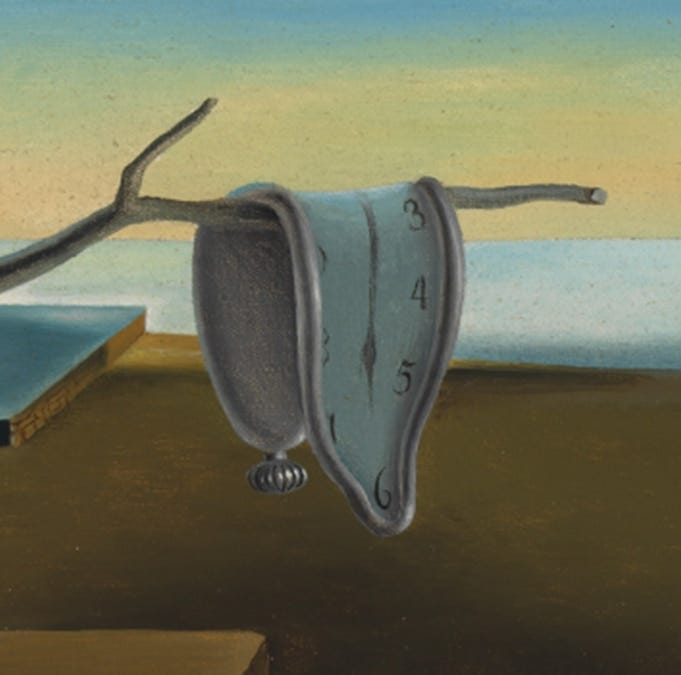
With respect to the question of time, I must confess that I refuse to take a position. When I was young - I am not any longer - I dabbled in such things as these. Now I am old and find these things largely irrelevant to living a Christian life. Such musings are interesting to those who find them interesting - and I do, I really do - but in the final analysis, I see no compelling reason to suspect that either the proponents of life eternal or those of life everlasting are more favoured by God than their dialectical opponents, and both may be able to inherit whatever it is that the Good Lord has in store for them - if such be their aim. The main problem with this debate as I see it is that in order to engage in it intelligently, I must have a working definition of what time actually is, and I have not yet found a satisfactory one - not in physics, and not in theology either. Thus, debating whether something stops or ends or collapses or continues into a mathematical infinity, without defining what that something is, seems a bit silly - albeit, not altogether devoid of some intellectual entertainment. I suppose, in this particular case, I am in agreement with Erasmus: “Devoutly, no doubt, did the apostles consecrate the Eucharist; yet, had they been asked the question touching the “terminus a quo,” and the “terminus ad quem” of transubstantiation; of the manner how the same body can be in several places at one and the same time; of the difference the body of Christ has in heaven from that of the cross, or this in the Sacrament; in what point of time transubstantiation is, whereas prayer, by means of which it is, as being a discrete quantity, is transient; they would not, I conceive, have answered with the same subtlety as the Scotists dispute and define it.”1 Perhaps, I am just getting too old for abstract academic exercises…
When it comes to the Holy Eucharist, my view has always been that, with respect to it, time neither stops nor continues to infinity. If I had to find a word for what I believe takes place, I would say that time and space collapse. What I mean by this is that in celebrating the Eucharist, we do not recreate it, for this would be absurd and impossible, but partake of the one and only Mystical Supper. It may be said that this Mystical Supper is outside of time, thus rendering the question “when?” meaningless. Or it may be said that the event of the Mystical Supper moves at the speed of causality with respect to all reference frames - in other words, it has no rest frame; and while it is possible for an outside observer to define it as an event in spacetime, as we become partakers of it, as we enter into its reference frame, the Lorentz factor collapses to infinity for us also, and we can no longer speak of time with any degree of coherence. In other words, within the reference frame of the Eucharist, it is meaningless to speak of the passage of time; and in the absence of time as a meaningful variable, it becomes equally meaningless to speak of space, thus making it possible to iconographically propose that in partaking of the Eucharist, we find ourselves partakers of the one and only Mystical Supper - in that space, at that time; and, since it moves at the speed of causality, in all of space and outside of time. Something like that, I suppose... but what do I know?!
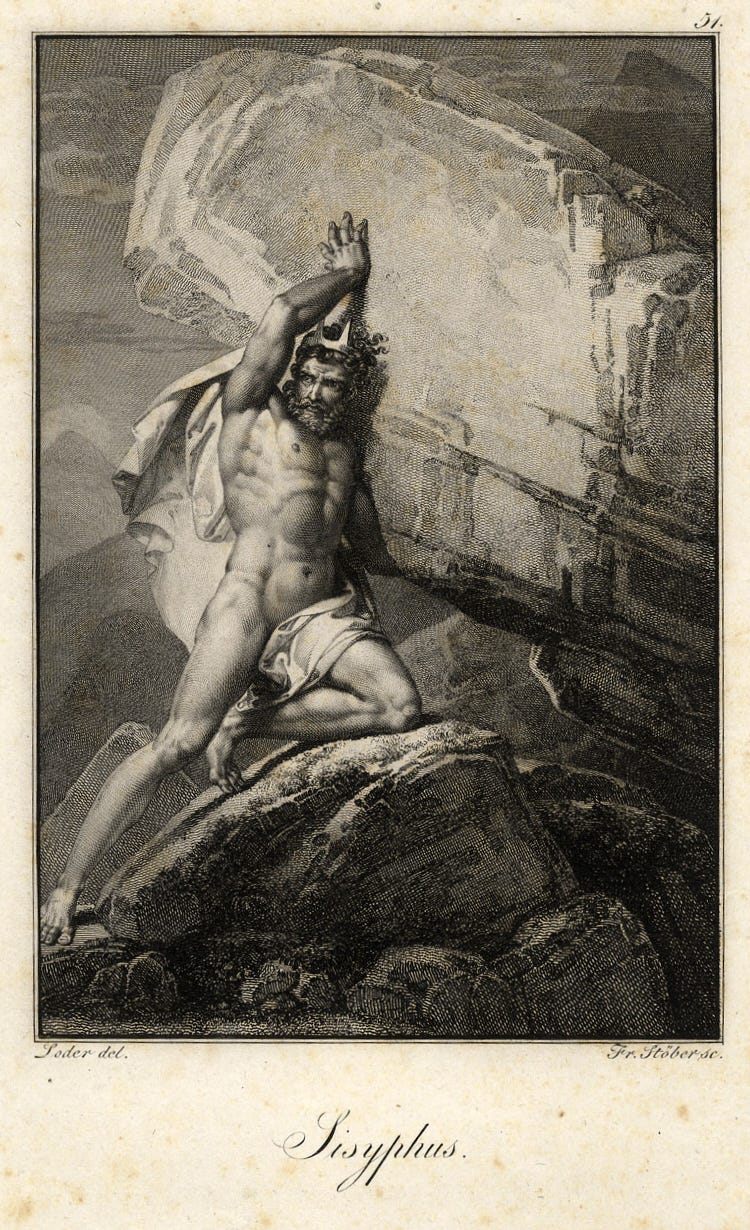
Sisyphus by Friedrich John after Matthäus Loder, 19th century
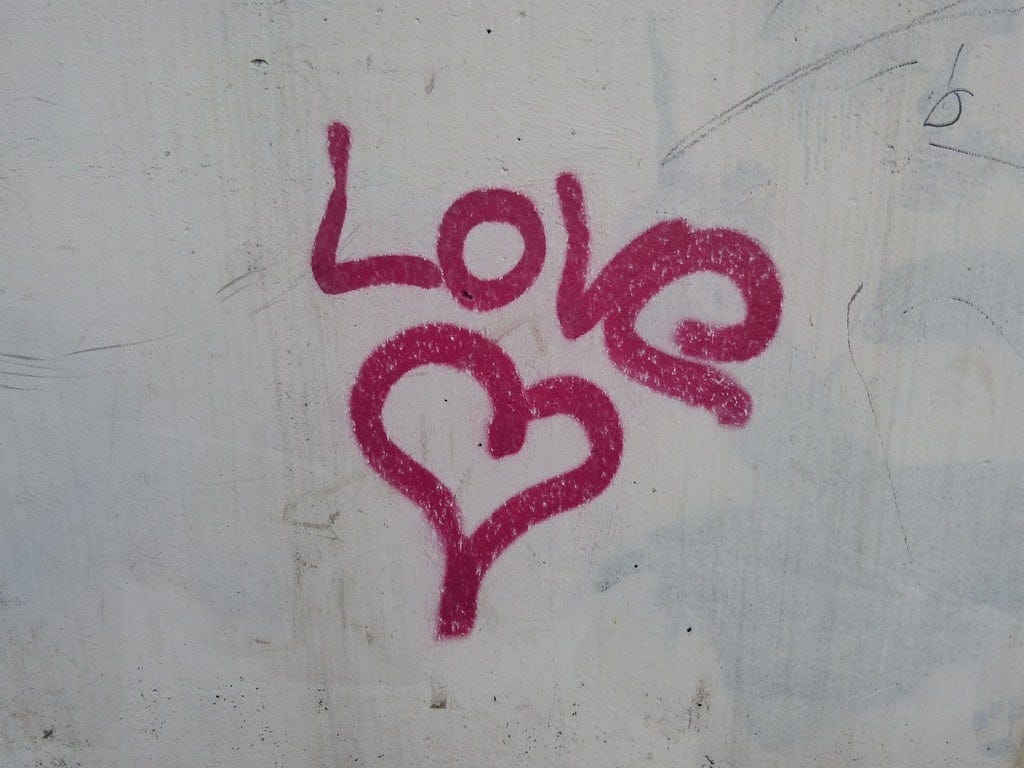
My post, however, was not meant to be an elucidation of mathematical concepts, nay, not even theology; rather, it was but a feeble attempt at expressing a feeling, an emotion triggered by a re-reading of Albert Camus. Alas, I am quite incapable of poetry, painting, or musical composition, and have no other option but to process feelings through prose. Feelings, however, are both fleeting and utterly unreliable as a basis for doing proper philosophy. In essence, this was my inner Sisyphus taking a brief moment to scribble some graffiti on his rock before hoisting it onto his shoulders and starting back up the hill. This poor guy - his perception of time can definitely be described as ever-lasting and never-ending. (Although, the punishment, I suppose is not in that the rock keeps rolling down every time, but in that all of it is absurdly meaningless - except, perhaps, for the graffiti: “Sisyphus + Merope = love forever.“)
This is a reader-supported publication. If you enjoy our posts, please share Phroneo with your friends and relations. And if you are so inclined, please consider becoming a paying subscriber. It is only $5 per month - one need not be the king of Ephyra in order to enjoy Phroneo.
Desiderius Erasmus, In Praise of Folly, 1509


